Get 10% off any permanent makeup or skincare service!
Protect your lip blush investment.
5 Lip Blush Aftercare Mistakes to Avoid
Lip Blushing in Grand Blanc, MI, Heal Right
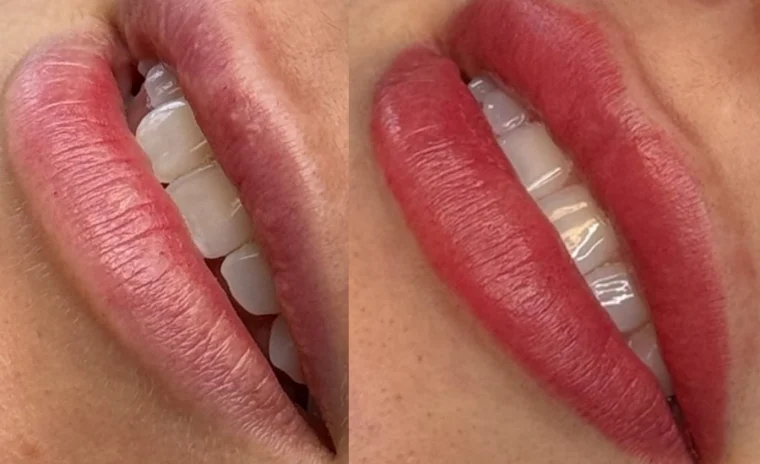
Protect your lip blush investment.
Lip Blushing in Grand Blanc, MI, Heal Right
Water is one of the most disruptive elements during the first phase of lip blush healing, and it is also one of the easiest mistakes to make. Many clients leave their appointment feeling great and return to their normal routine without thinking twice about drinking from a water bottle, splashing their face in the sink, or catching rain on a quick walk to the car. In the first 24 to 72 hours after your lip blushing treatment, moisture that sits on the lips can dilute the pigment before it has had a chance to settle into the skin. The result is uneven color, patchy fading, or a washed-out appearance that becomes most apparent once the initial healing is complete.
This is especially relevant for clients in Grand Blanc and the surrounding Genesee County area, where winter months bring wet, cold air that naturally draws moisture to exposed skin. If you are heading into an appointment between November and March, plan your aftercare around the weather. Use a straw when drinking for the first three days, pat your face dry rather than rubbing after washing, and avoid steam treatments or hot showers that direct water and vapor toward your face. It is also worth noting that sweat can be just as damaging as water during the initial healing window. If you have a workout scheduled within 48 hours of your session, consider rescheduling it. The investment you make in a lip blush service is significant, and protecting it during those critical first few days is what determines the richness and longevity of your final result.
Between days three and seven, most lip blush clients experience some degree of peeling or flaking. The outer layer of skin sheds as the pigment beneath it works its way into the deeper layers of the lip tissue. This is a completely normal and expected part of the process. What is not part of a healthy healing process is picking at that peeling skin. When you pull away skin that has not naturally released on its own, you lift pigment along with it. This creates patchy spots, uneven saturation, and in some cases, small areas of scarring that can affect how future permanent makeup applications perform on that skin.
The temptation to peel is real, particularly when the flaking becomes visible in social situations or during work meetings. Many clients mention that the peeling stage falls at the most inconvenient time, right when they have an event or photo scheduled. If you are planning a significant event, coordinate your appointment timing with your artist so that the healing window does not overlap with that date. During the peeling phase, apply only the aftercare ointment provided or recommended by your studio, and allow the skin to shed naturally. Avoid lipstick, gloss, or any lip product that has not been cleared for use during healing. Clients who also receive other skincare services such as facials or chemical peels should communicate their recent lip blush timeline to their esthetician, as certain active ingredients can disrupt pigment retention even after healing appears complete.
The skincare routine that works beautifully on your face the other 364 days of the year can actively work against your lip blush results during the healing period. Retinols, AHAs, BHAs, vitamin C serums, and exfoliating toners are ingredients designed to accelerate cell turnover, which is exactly what you do not want when pigment is trying to bond with your lip tissue. Many clients do not think about the products that may migrate toward the lip area during their normal morning and evening routines. Even applying a serum or moisturizer close to the lip border can introduce actives that interrupt pigment retention.
This mistake is particularly common among clients who maintain active skincare regimens, including those who use treatments like RF microneedling or who have recently received a diamond glow facial. If you have a skincare appointment scheduled within two weeks of your lip blush session, let your studio know so the timing can be adjusted. During the healing window, your lip area needs the simplest possible environment: a plain, fragrance-free ointment applied with clean fingertips, and nothing else directly on or near the lips. Avoid whitening toothpastes, which can be surprisingly aggressive, and rinse carefully after brushing to minimize contact. Clients throughout the Flint and Fenton areas often note that Michigan winters prompt heavier use of thick face creams and balms, so check ingredient labels carefully before applying anything to the lip zone during recovery.
UV exposure is one of the leading causes of premature pigment fading in all forms of permanent makeup, including lip blushing, microblading, powder brows, and permanent eyeliner. During the healing phase, your lips are especially vulnerable because the skin barrier has been disrupted and the pigment has not yet fully settled. Direct sun exposure during this window can bleach the pigment before it has stabilized, leading to a significantly lighter result than intended. Even after healing is complete, unprotected UV exposure over months and years will accelerate fading and alter the undertone of the pigment, sometimes shifting warm rose shades toward an ashy or grayish tone.
This is worth taking seriously for clients in the Grand Blanc area who spend time outdoors, whether that means afternoon walks along the trails near Warwick Hills, running errands on hot summer days, or attending outdoor events. During the first two weeks post-treatment, avoid direct sun on your lips as much as possible. Wear a wide-brimmed hat when outdoors and try to stay in shaded areas. Once the lips are fully healed, applying an SPF-containing lip balm daily is one of the single most effective habits you can build to protect your lip blush investment long-term. Clients who come back for their yearly lip blush touch-up and have consistently worn SPF almost always retain significantly more color between sessions. It is a simple step that makes a measurable difference in how long your results last and how true-to-color they remain over time.
Lip blushing is a two-step process for most clients. The initial session deposits pigment and allows the artist to assess how your skin accepts color. Because every person’s skin type, undertone, oil production, and immune response is different, the first session intentionally leaves room for refinement. The touch-up appointment, typically scheduled six to eight weeks after the initial session, is where the artist evaluates retention, adds density and saturation where needed, and makes any adjustments to shape or tone. Skipping this appointment does not just mean settling for a lighter result. It means leaving the work unfinished.
Clients sometimes postpone their touch-up because the results look good at first glance once healing is complete. The lips may appear beautifully pigmented in week three or four, but the true healed result reveals itself more clearly by weeks six through eight, and that is when the touch-up has the most impact. Missing this appointment is one of the most common reasons clients are disappointed with their long-term results, even when the initial session went perfectly. This same principle applies to other permanent cosmetic services including nano brows and permanent eyeliner, where follow-up sessions are built into the process by design. If your schedule is tight, speak with your studio about the best window for rescheduling rather than skipping altogether. At our Grand Blanc studio, we work with clients from across the region, including those coming from Fenton, Swartz Creek, and Lake Orion, to find appointment times that make the two-step process practical and accessible. For more on what to expect before and after any permanent cosmetic procedure, visit our before and after care guide.